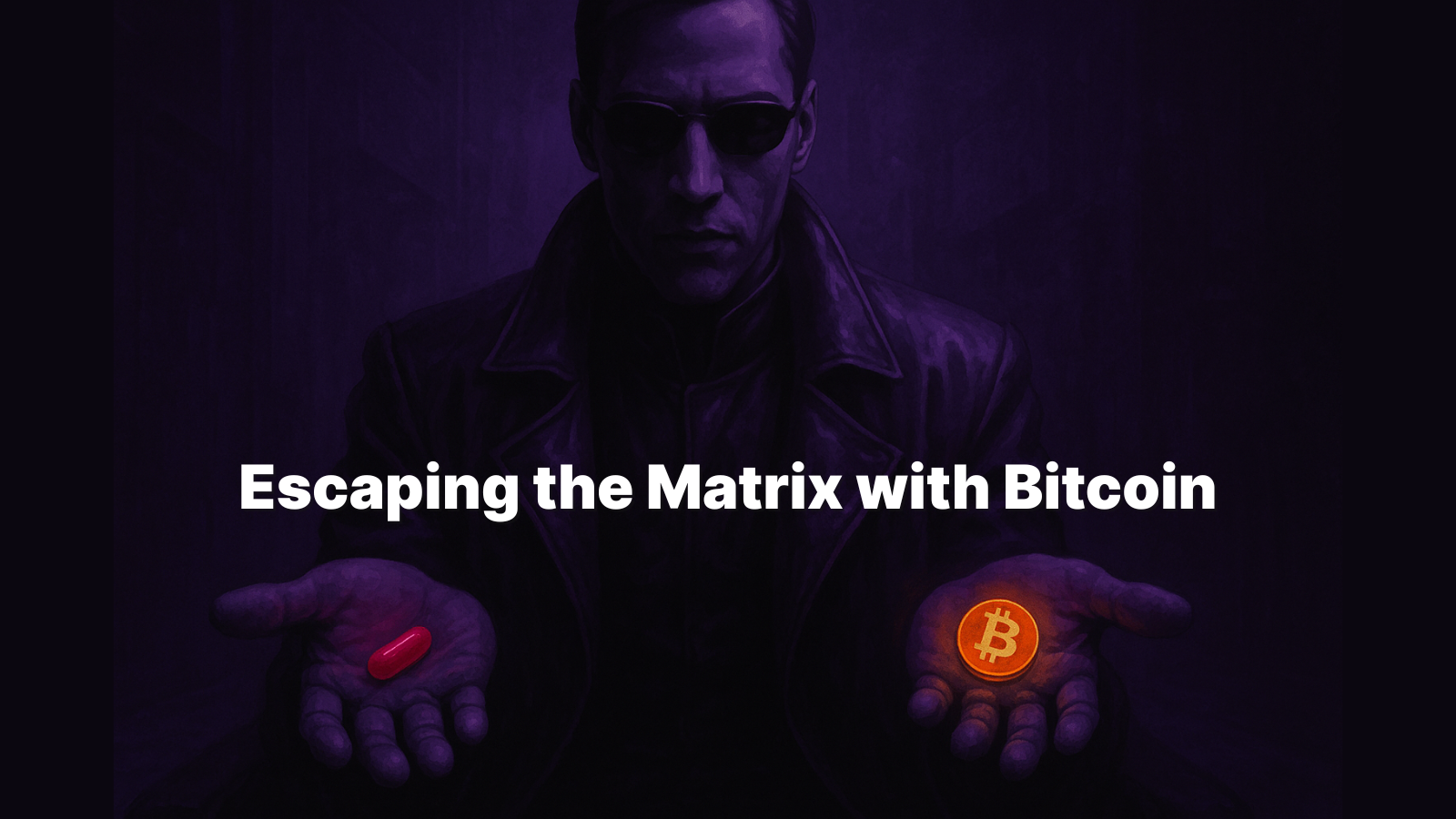
The “Matrix” you already live in
If you’ve ever waited days for a cross-border transfer, watched fees eat remittances, or been told “this service isn’t available in your country,” you’ve felt the Matrix of closed finance. It’s a web of correspondent banks, card networks, and proprietary ledgers that make moving value slow, expensive, and exclusionary.
The numbers aren’t subtle. 1.4 billion adults remain unbanked, even as digital access spreads proof that the legacy model still gatekeeps basic financial tools. Meanwhile, global remittances still cost ~6.49% on average, siphoning income from families who can least afford it. Regulators know it’s broken: the G20’s 2027 targets explicitly demand cross-border payments that are faster, cheaper, more transparent, and more inclusive.
At the same time, our lives have gone mobile-first. Smartphones dominate handset share and the online population keeps climbing; mobile technologies already generate 5.8% of global GDP (~$6.5T) and are tracking toward ~$11T by 2030. Money has to move at the speed of the internet or users will route around the bottlenecks.
The Orange pill: open monetary rails
Bitcoin offers an exit: a neutral, global settlement layer with transparent, capped supply (21 million) and programmatic issuance that halved in April 2024 from 6.25 to 3.125 BTC per block. On top of it, the Lightning Network moves value in seconds with tiny routing fees; enterprise measurements show 99.7% payment success on well-provisioned nodes and millions of routed payments per month metrics you don’t see on legacy rails at micro-ticket sizes.
Access has also crossed the mainstream threshold. On January 10, 2024, the U.S. SEC approved 11 spot Bitcoin ETPs, bringing retirement accounts, brokerages, and risk frameworks into the conversation. You no longer need to be “a crypto company” to plug into bitcoin demand or to use bitcoin rails behind familiar fiat experiences.
How you escape without breaking the UX
Neutron’s job is to make the orange pill practical: save in bitcoin, move money at internet speed, and unlock liquidity when needed all while customers keep using the local currencies and payment methods they know.
1) Save globally, spend locally: Neutron Wallet
Households and SMEs can automate small, regular buys (DCA) into BTC as long-term savings, taking advantage of bitcoin’s fixed supply rules while continuing to pay day-to-day in local fiat. When it’s time to spend, convert only what’s needed back to fiat. The savings rail is global; the checkout stays local. The thesis isn’t ideology, it’s math: capped supply plus mainstream access and distribution.
2) Send like the internet: Neutron API
Behind the scenes, Neutron API converts fiat to BTC, routes over Lightning in seconds, and settles BTC to fiat at the edge so your user sees a normal bank or wallet credit while you achieve the faster/cheaper outcomes the G20 is pushing for. Lightning’s fee model (sats, parts-per-million) lets providers price closer to real network + compliance + FX costs instead of legacy “percentage of principal” rails.
3) Liquidity without selling: Neutron Lend
When opportunity knocks or cash is tight qualified users can borrow against BTC at conservative loan-to-value ratios instead of selling their long-term position. That preserves upside while solving short-term needs, with clear margin and liquidation thresholds to manage volatility risk. (Terms vary by market; borrow prudently.)
What changes when you flip the rail
- Speed: real-time Lightning settlement helps you hit the goal consistently, including long-tail corridors that correspondent banking still underserves.
- Cost: you can move average landed costs materially below the ~6.49% remittance baseline while protecting margin because mid-corridor “rent” shrinks to network fees and your FX spread.
- Reach: with mobile now a multi-trillion-dollar growth engine, open rails meet users where they live on phones, across borders, 24/7.
“But isn’t Bitcoin volatile?”
Yes and that’s why the architecture matters. Users don’t need to hold BTC to benefit from Lightning settlement. They can fund and receive in fiat; the bitcoin leg exists between providers. For those who do save in BTC, regular, small purchases smooth timing risk, and borrowing against collateral (instead of selling) keeps long-term exposure intact provided you respect conservative LTVs and clear margin rules.
Neo’s choice, in 2025 terms
Red pill: stay with closed rails slow, expensive, and exclusionary and hope incremental upgrades arrive in time.
Orange pill: adopt open monetary infrastructure Bitcoin + Lightning and deliver money that moves like the internet while your users keep their familiar fiat experience.
Neutron is the bridge: a Wallet to save globally and spend locally, an API to settle cross-border in seconds, and Lend to unlock liquidity without selling. Step out of the Matrix quietly, compatibly, and on your own roadmap.